


















Datacenter Proxies vs. Residential Proxies: Which One Do You Really Need?
In today's internet landscape, your IP address functions like a digital passport—it determines how websites perceive, trust, or restrict you. But not all IPs are treated equally.
Imagine trying to enter an exclusive, invite-only gala. You have two options: arrive in a clearly branded corporate shuttle (Datacenter Proxy) or pull up in a private family sedan (Residential Proxy). The shuttle is fast and efficient, but security immediately recognizes it as commercial traffic. The sedan blends naturally into the crowd and passes without question.
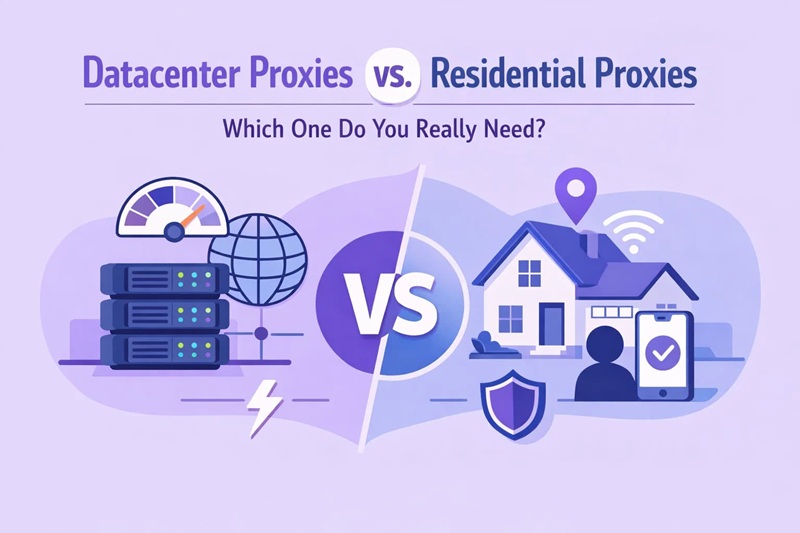
This fundamental trade-off—speed and scalability vs. trust and authenticity—is exactly what separates datacenter proxies from residential proxies.
TL;DR: Datacenter Proxies vs. Residential Proxies (Quick Decision Guide)
If you're short on time, here's the fast verdict:
- Datacenter Proxies → Best for speed, scale, and budget efficiency
Ideal for bulk scraping, crawling low-security sites, or bandwidth-heavy tasks. - Residential Proxies → Best for stealth and high-trust environments
Essential for Amazon, Google, Instagram, sneaker drops, and account management. - Static Residential (ISP) Proxies → The hybrid option
Datacenter-level speed with residential legitimacy.
📡 What Are Datacenter Proxies?
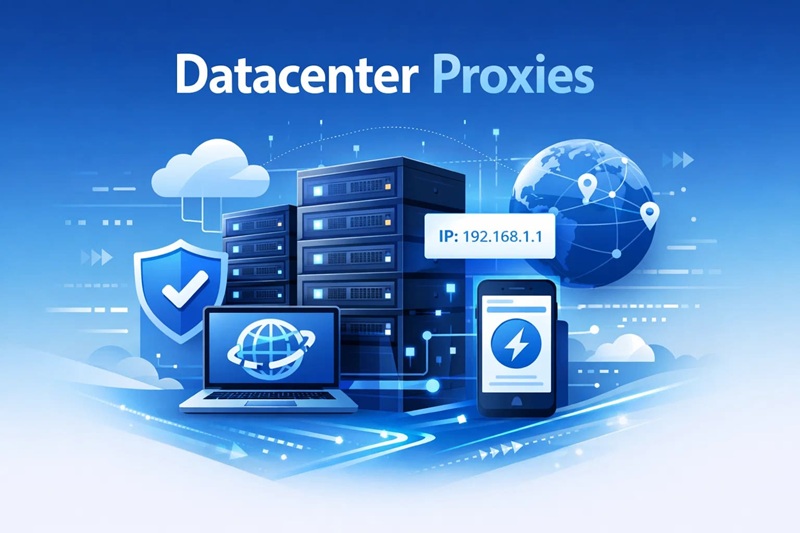
Datacenter proxies are IP addresses provided by cloud service providers or hosting companies rather than consumer Internet Service Providers (ISPs). These IPs are hosted on servers inside professional data centers and are not associated with real households or individual users.
From a website's perspective, traffic coming from datacenter proxies typically looks like it originates from servers instead of real people browsing from home networks. This makes them fast and reliable—but also easier to identify.
Types of Datacenter Proxies
Datacenter proxies are generally divided into two main categories based on how the IPs are allocated and used.
① Shared Datacenter Proxies
Shared datacenter proxies are IP addresses used simultaneously by multiple users.
Key characteristics:
- Lower cost compared to other proxy types
- Easy to scale for large-volume tasks
- Higher risk of bans due to mixed and unpredictable usage behavior
These are often used for non-sensitive tasks where cost efficiency matters more than IP reputation.
② Dedicated (Private) Datacenter Proxies
Dedicated datacenter proxies assign IP addresses exclusively to a single user.
Key characteristics:
- Better stability and IP reputation
- Lower ban risk than shared datacenter proxies
- Higher cost, but more consistent and predictable performance
Dedicated datacenter proxies are a better fit for long-running tasks or scenarios that require stable sessions.
✅ Advantages of Datacenter Proxies
- Extremely High Speed: Hosted on enterprise-grade infrastructure with direct fiber connections, datacenter proxies deliver ultra-low latency and very high throughput. They are ideal for speed-sensitive tasks such as large-scale scraping or automated requests.
- Cost-Effective at Scale: Because datacenter IPs can be generated in large quantities, they offer the lowest cost per IP among all proxy types—making them attractive for projects that require thousands of IPs.
- High Stability & Uptime: Data center servers are designed to operate 24/7. Unlike residential connections, they rarely disconnect, reboot, or suffer from unstable network conditions.
⚠️ Disadvantages of Datacenter Proxies
- Easy to Detect: Websites can identify datacenter IPs by checking their ASN (Autonomous System Number), which clearly labels them as cloud or hosting infrastructure rather than consumer networks.
- Subnet-Level Bans: Datacenter IPs are usually issued in large, contiguous blocks. If one IP is flagged, entire subnets may be banned at once—instantly invalidating dozens or even hundreds of proxies.
🏠 What Are Residential Proxies?
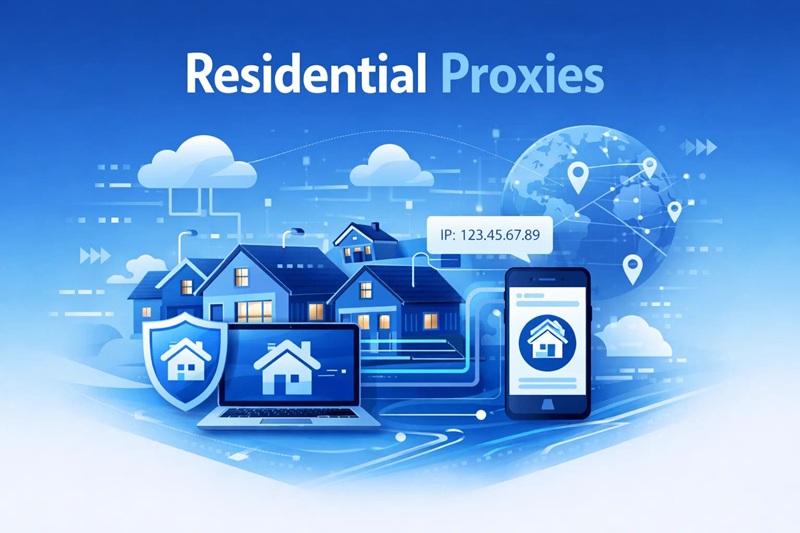
Residential proxies use IP addresses assigned by Internet Service Providers (ISPs) to real homes and apartments. To websites, traffic from residential proxies appears to come from genuine household users.
Because of this, residential proxies are widely regarded as the highest-trust proxy type available.
Types of Residential Proxies
Residential proxies are typically categorized based on how IPs are rotated or assigned.
① Rotating Residential Proxies
Rotating residential proxies automatically change IP addresses per request or at fixed intervals.
Best for:
- Large-scale web scraping
- Automation and data collection
- Avoiding rate limits and IP-based blocks
② Static (Dedicated) Residential Proxies
Static residential proxies (often called ISP proxies) provide a single residential IP assigned exclusively to one user for long-term use.
Best for:
- Account management
- Login sessions
- Tasks requiring IP consistency and persistence
✅ Advantages of Residential Proxies
- Maximum Trust & Stealth: Residential IPs belong to consumer ASNs, making them extremely difficult for websites to distinguish from real users.
- Precise Geo-Targeting: Residential proxies allow targeting by country, city, or even specific ISP—ideal for localized content access, ad verification, and market research.
- Lower Ban Risk: Websites are far more cautious about blocking residential IPs, as doing so could affect real customers.
⚠️ Disadvantages of Residential Proxies
- Higher Cost: Residential IPs are harder to source and maintain, which makes them more expensive than datacenter proxies.
- Metered Bandwidth: Most residential proxy providers charge based on data usage (GB), which can increase costs for bandwidth-heavy tasks.
- Variable Speed: Performance depends on the underlying residential network quality, which is generally less consistent than data center infrastructure.
Datacenter Proxies vs. Residential Proxies: Side-by-Side Comparison
To help you understand the trade-offs and choose the right proxy for your needs, here's a detailed comparison between Datacenter Proxies and Residential Proxies:
Core Comparison Table
| Feature | Datacenter Proxies | Residential Proxies |
|---|---|---|
| IP Source | Cloud Servers / Data Centers | Real ISPs (Comcast, Verizon, etc.) |
| Anonymity Level | Moderate | Very High |
| Detection Risk | High (Easily flagged by ASN) | Very Low (Looks like a real person) |
| Speed | Extremely Fast (1Gbps+) | Moderate (Depends on home ISP) |
| Cost | Low (Price per IP) | High (Price per GB) |
| Geo-Targeting | Limited to Datacenter locations | Granular (Country/City/Zip) |
| Stability | High (Server-based) | Variable (Home routers can reset) |
| Best For | Bulk Scraping / Fast Tasks | High-Security Sites / Account Management |
Elaboration on Key Differences
1️⃣ IP Source: The Foundation of Your Proxy
Datacenter Proxies: These are IP addresses provided by cloud service providers or hosting companies. While they offer speed and efficiency, they are not tied to any real-world locations or households, which makes them easier to identify by websites as non-human traffic.
Residential Proxies: These IPs are assigned by ISPs (like Comcast, AT&T, etc.) to real homes or businesses, making them nearly undetectable. Websites see them as coming from regular users, giving them much higher trustworthiness.
2️⃣ Anonymity Level: How Hidden Are You?
Datacenter Proxies: Moderate anonymity. Websites can easily detect datacenter IPs by their ASN (Autonomous System Number). These IPs are often flagged as commercial traffic.
Residential Proxies: Very high anonymity. Residential proxies appear as if they are from regular home users, offering a much higher trust level. Websites usually don't block residential IPs due to the risk of blocking actual customers.
3️⃣ Detection Risk: How Likely Are You to Get Blocked?
Datacenter Proxies: High detection risk. Since many proxies are used in bulk from the same server farm, websites can easily detect and block large portions of these IPs by checking their ASN.
Residential Proxies: Very low detection risk. These proxies are scattered across real homes and have a much lower chance of being flagged because they blend seamlessly into normal user traffic.
4️⃣ Speed: How Fast Can You Get the Job Done?
Datacenter Proxies: These proxies are extremely fast with high-speed servers providing 1Gbps or more. They are perfect for tasks requiring high throughput like scraping or crawling large amounts of data.
Residential Proxies: Moderate speed. Since residential IPs are linked to home internet connections, the speed depends on individual connection quality. This means they are usually slower compared to datacenter proxies.
5️⃣ Cost Model: How Much Are You Paying?
Datacenter Proxies: Typically, datacenter proxies are sold per IP, making them a cost-effective option for bulk usage or tasks where speed is the priority.
Residential Proxies: These are metered (based on data usage, like GB), so they tend to be more expensive. However, the higher cost is justified for tasks that require stealth and trust like managing social media accounts or accessing geo-blocked content.
6️⃣ Geo-Targeting: Can You Access Specific Locations?
Datacenter Proxies: Geo-targeting is often limited to datacenter locations, meaning you can only target broad regions (like countries).
Residential Proxies: Granular geo-targeting is one of the strongest points of residential proxies. You can target specific cities, zip codes, or even specific ISPs, making them ideal for tasks like local ad verification or market research.
7️⃣ Stability: How Reliable Is the Proxy?
Datacenter Proxies: High stability. These proxies are hosted on dedicated servers with high uptime, ensuring that they are available 24/7. You won't face issues like unreliable connections.
Residential Proxies: Variable stability. The reliability of residential proxies depends on the quality of the home internet connection, which means they can sometimes experience downtimes or resets due to the nature of home routers.
8️⃣ Best Use Cases: Which One Is Right for Your Task?
Datacenter Proxies: Best suited for bulk scraping, crawling, and high-speed tasks where performance matters more than stealth.
Residential Proxies: Ideal for high-security websites like social media management, sneaker drops, or localized content access, where anonymity and trust are paramount.
Which Proxy Type Should I Choose?
Choosing the right tool depends entirely on your target. If you are scraping a simple hobbyist blog, a datacenter proxy is plenty. If you are trying to compete in the high-stakes world of e-commerce or social media, you need the heavy hitters.
Common Use Cases & Recommended Choice
| Scenario | Recommended Type | Why? |
|---|---|---|
| Sneaker/Toy Drops (Labubu, Nike) | 🏠 Residential | Retail sites use advanced bot detection that instantly kills datacenter IPs. |
| Social Media Management | 🏠 Residential | Managing multiple IG/TikTok accounts on datacenter IPs leads to "Shadowbans." |
| Market Research (Simple Sites) | 📡 Datacenter | It's faster and much cheaper for scraping public, non-protected data. |
| Ad Verification | 🏠 Residential | To see if your ads are showing correctly to real people in specific regions. |
| SEO Ranking Tracking | 📡 Datacenter/🏠 Residential | Use DC for speed, but switch to Residential if Google starts showing CAPTCHAs. |
| Web Crawling (Massive Data) | 📡 Datacenter | The unlimited bandwidth makes it the only financially viable option for terabytes of data. |
Static Residential (ISP) Proxies: The Hybrid Evolution
Static residential proxies combine datacenter-grade performance with residential ASN legitimacy.
They are physically hosted in data centers but use IPs leased directly from ISPs. To websites, they appear as standard residential users—without the speed limitations of rotating residential IPs.
Best use case:
- Long-term account logins
- E-commerce seller dashboards
- LinkedIn, Facebook Business, Amazon Seller Central
Whether you're managing multiple accounts or accessing region-specific data, they offer a powerful way to maintain anonymity while ensuring fast, stable connections.
How to Choose a High-Quality Proxy Provider
Not all proxy providers are created equal. Many "free" or "cheap" providers use stolen IPs or poorly managed servers, which can lead to data leaks or instant bans. In the modern landscape, stability and compliance are the most important factors.
To get the best results, you need a provider that balances a massive IP pool with high-tier technology. This is where OkeyProxy stands out.
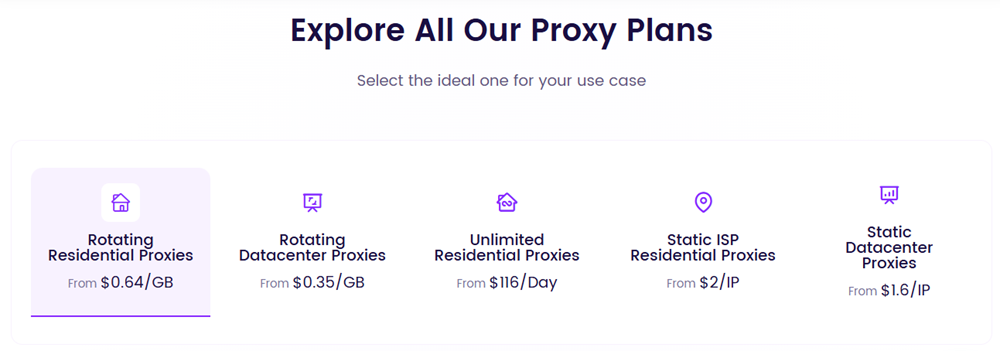
OkeyProxy offers the flexibility to choose between high-quality Residential and Datacenter proxies based on your needs:
- Residential Proxies: Features over 150 million real IPs with high anonymity and granular targeting. Perfect for applications requiring frequent IP rotation and "human-like" behavior.
- Datacenter Proxies: High-performance, scalable IPs designed for high-speed automated tasks where cost-efficiency is king.
With multiple packages available and a reputation for stability, OkeyProxy ensures your automation tasks stay under the radar and run at peak performance. Start your high-efficiency proxy journey with OkeyProxy today!
Conclusion: Play the Hand Your Mission Requires
At the end of the day, there is no "winner" in the datacenter proxies vs. residential proxies debate—there is only the right tool for the job.
- If your mission requires raw power, massive volume, and a low budget, Datacenter proxies are your best friend.
- If your mission requires finesse, absolute stealth, and high success rates on protected websites, Residential proxies are non-negotiable.
Understand your target's defenses first. If they have high walls and tight security, go Residential. If they are open and welcoming, save your budget and go Datacenter. By matching your "digital identity" to your task, you turn the complex world of web automation into a calculable path to success.
